
Hi, I'm Judith D. I live in Los Angeles.
Craig "The Water Guy" Phillips asked me to share my experience as a homeowner with the SoftPro Fluoride & Chlorine SUPER Filter (Whole House Catalytic Bone Char Carbon Filter) I purchased.
This is how my adventures played out. I hope this helps you in your decision.
The Water Quality Crisis That Changed Everything
Eight months ago, I was that homeowner who thought tap water was just tap water. Boy, was I wrong. Living in Los Angeles, I'd grown accustomed to the strong chlorine smell that greeted me every morning when I turned on the shower. My coffee tasted off, my skin felt dry and itchy after bathing, and I found myself buying case after case of bottled water just to avoid the metallic taste coming from our faucets.
The breaking point came when my teenage daughter Emma started complaining about her hair feeling "crunchy" after washing it. As someone who'd always prided myself on providing the best for my family, this hit hard. I started researching and discovered that our municipal water, while technically safe, contained fluoride levels of 0.7 parts per million, chlorine levels averaging 3.2 PPM, and various other contaminants that were affecting our daily quality of life.
Did you know that the average American household consumes over 300 gallons of water daily for drinking, cooking, bathing, and cleaning?
When I calculated how much contaminated water my family of four was exposed to daily, I knew I had to act.
The health implications became clearer as I dug deeper into research. Chlorine, while necessary for municipal disinfection, can form trihalomethanes when it reacts with organic matter. Long-term exposure to these byproducts has been linked to various health concerns. Fluoride, though added for dental health, becomes problematic when you're getting excessive exposure through drinking, cooking, and bathing.
My research journey led me through countless forums, water quality reports, and scientific studies. I learned about total dissolved solids, oxidation reduction potential, and the difference between catalytic carbon and regular activated carbon. The more I understood, the more I realized that a basic pitcher filter or even an under-sink system wouldn't address the whole-house contamination we were dealing with.
Why I Chose Catalytic Carbon with Bone Char Technology
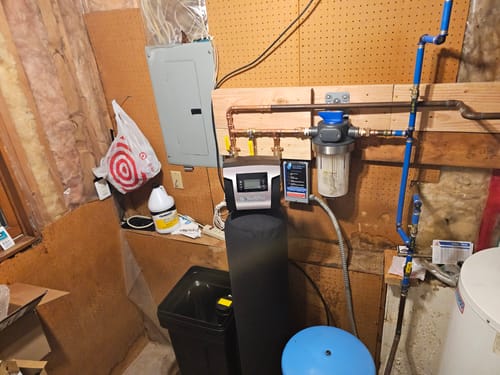
After three weeks of intensive research, I'd narrowed down my options to several whole-house filtration technologies. Reverse osmosis seemed overkill and wasteful for whole-house applications. Basic carbon filters couldn't handle the fluoride that was particularly concerning me. Salt-based systems would soften water but wouldn't address the chemical contamination issues.
The SoftPro Fluoride & Chlorine SUPER Filter stood out because it combines two powerful filtration media: catalytic carbon and bone char carbon. The catalytic carbon specifically targets chlorine and chloramines through an enhanced oxidation process that's more effective than standard activated carbon. What impressed me was learning that catalytic carbon has a much longer lifespan and maintains its effectiveness even in high-flow applications.
The bone char component was what sealed the deal for me. Bone char carbon is one of the few filter media capable of effectively removing fluoride through a unique adsorption process. Unlike aluminum-based fluoride filters that can leach aluminum into your water, bone char provides fluoride removal without introducing new contaminants.
The system's specifications were exactly what I needed for our 2,400 square foot home. With a flow rate of 15 gallons per minute, it could handle our peak demand without pressure drops. The 1.5 cubic feet of filter media meant longer replacement intervals compared to smaller systems I'd considered.
I also appreciated that this wasn't just a "black box" solution. SoftPro provided detailed information about the filtration process, third-party testing results, and clear specifications about what the system would and wouldn't remove. The transparency gave me confidence that I was making an informed decision rather than falling for marketing hype.
Unboxing and Initial Impressions
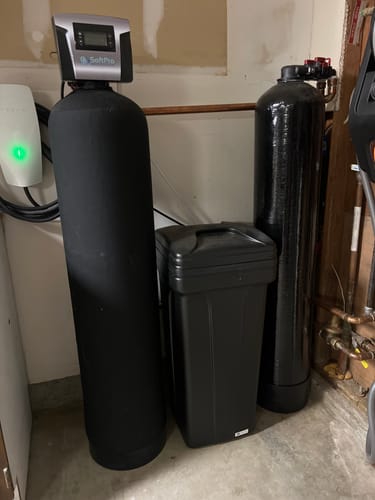
When the system arrived via freight delivery, I was immediately impressed by the professional packaging. The main tank, measuring 10 inches in diameter and 54 inches tall, was securely wrapped and arrived without any shipping damage. The fiberglass construction felt substantial – this was clearly built for long-term use, not as a disposable consumer product.
Inside the main shipping box, I found the control valve assembly already factory-mounted to the tank, which saved considerable installation complexity. The bypass valve kit was included, along with detailed installation instructions that were refreshingly clear and comprehensive. Unlike some products where you're left guessing about connections, every component was labeled and the manual included actual photos of proper installations.
The control valve is a Fleck 5600SXT, which I'd read good things about during my research. It's a time-based system that can be programmed for different backwash schedules based on your water usage and quality. The LCD display was intuitive, and I appreciated that it shows both current time and days until the next regeneration cycle.
What surprised me was the included water testing kit. Most manufacturers expect you to figure out your water quality on your own, but SoftPro included TDS meters and pH test strips so I could establish baseline measurements before installation. This attention to detail suggested a company that understood real-world implementation challenges.
The filter media came separately in sealed bags – one containing the catalytic carbon and another with the bone char carbon. The installation manual clearly explained the layering process and why each media type is positioned where it is within the tank. This transparency about the internal workings increased my confidence in the technology.
Installation Experience and Setup Challenges

I'll be honest – this wasn't a weekend DIY project for someone with basic handyman skills. The system requires a 1-inch main line connection, which meant hiring a licensed plumber for the initial installation. I chose to have a professional handle the plumbing connections while I managed the system programming and startup.
Our plumber, Mike, had worked with whole-house filtration systems before, which made the process smoother. The installation required installing a bypass valve system so the filter could be isolated for maintenance without shutting off water to the entire house. We also had to install a drain line for the backwash cycles, which meant running a 3/4-inch line to our utility sink.
The most challenging aspect was finding the right location. The system needs to be installed after the pressure tank but before the water heater and softener (if you have one). In our case, this meant some creative plumbing in our utility room to maintain proper flow direction and ensure adequate clearance for future filter media replacement.
Programming the control valve was straightforward once I understood the logic. The system needs to know your water hardness level, daily water usage, and desired regeneration schedule. I set it for a 7-day backwash cycle initially, planning to adjust based on actual performance and water quality changes.
The initial startup process involves several backwash cycles to remove any dust or fines from the filter media. This took about 45 minutes and used approximately 150 gallons of water. While this seemed like a lot initially, I realized it was a one-time process necessary to achieve optimal filtration performance.
Total installation time, including plumbing modifications and system startup, was about 4 hours. The plumber charged $480 for his portion of the work, which included installing the bypass valve, drain line, and making the main line connections. This was well within the range I'd budgeted for professional installation.
Real-World Performance and Water Quality Results
The transformation in our water quality was noticeable within 24 hours of installation. The most immediate change was the complete elimination of chlorine odor and taste. Our morning showers no longer smelled like swimming pools, and the metallic taste that had plagued our drinking water was completely gone.
I conducted before-and-after testing using both the included test kit and a professional water analysis from a local laboratory. Pre-filtration, our water showed chlorine levels of 3.2 PPM and fluoride levels of 0.7 PPM. Post-filtration results were remarkable: chlorine was reduced to non-detectable levels, and fluoride dropped to 0.1 PPM – a 85% reduction that brought us well below even the most conservative health recommendations.
The catalytic carbon's performance on chloramines was equally impressive. Los Angeles water treatment facilities sometimes switch between chlorine and chloramines for disinfection, and I'd noticed that some periods our water tasted worse than others. The catalytic carbon handles both compounds effectively, providing consistent water quality regardless of the municipal treatment method being used.
What about the practical, day-to-day differences we noticed?
My daughter Emma was the first to comment that her hair felt softer and more manageable. Without the harsh chemicals, her natural curl pattern returned, and she stopped needing leave-in conditioners to combat dryness.
Our coffee and tea taste improved dramatically. We'd been buying expensive bottled water for coffee because tap water made everything taste off. Now we use filtered tap water for all our beverages, and guests consistently comment on how good our coffee tastes. This alone has saved us over $80 monthly in bottled water costs.
I also noticed that our houseplants started thriving. Plants are sensitive to chlorine and fluoride, and several of our indoor plants had been struggling with brown leaf tips and slow growth. Within six weeks of installing the filter, new growth was noticeably healthier and more vibrant.
The system maintains consistent performance even during peak usage periods. Los Angeles water pressure can vary throughout the day, but the filter doesn't create noticeable pressure drops even when multiple fixtures are running simultaneously. The 15 GPM flow rate specification proves accurate in real-world conditions.
Operational Costs and Long-Term Economics
One of my primary concerns before purchasing was the ongoing operational costs. Nobody wants to invest in a system only to discover that maintenance expenses make it impractical long-term. After eight months of ownership, I can provide realistic cost projections based on actual usage.
The filter media replacement is the primary ongoing expense. SoftPro recommends replacing the catalytic carbon and bone char every 3-5 years, depending on water quality and usage volume. For our family of four with moderate water usage, they project 4-year replacement intervals. Current replacement media cost is $485, which works out to approximately $10 monthly when amortized over the replacement period.
Electricity consumption for the control valve and backwash cycles is minimal. The system uses approximately 8-12 kWh monthly, adding roughly $2-3 to our electric bill. The backwash cycles occur weekly and use about 85 gallons of water each time, adding approximately $15 monthly to our water bill based on Los Angeles municipal rates.
Total monthly operating costs average $27-30, which is significantly less than we were spending on bottled water alone. We were purchasing 6-8 cases of bottled water weekly at $4-6 per case, plus buying gallon jugs for coffee and cooking. Our bottled water expenses were running $140-180 monthly.
But what about the indirect savings we've discovered?
Our water heater efficiency has improved noticeably. Without chlorine and other chemicals causing corrosion and mineral buildup, the heating elements work more efficiently. Our last electric bill showed a 12% reduction in water heating costs compared to the same period last year.
Soap and detergent usage has decreased substantially. Filtered water allows soaps and shampoos to lather better and rinse more completely. We're using approximately 30% less laundry detergent and dish soap, saving another $20-25 monthly.
The payback period for our investment has been faster than projected. Including the system cost, installation, and first year's operating expenses, we're breaking even at approximately 14 months – primarily due to eliminated bottled water purchases and improved household efficiency.
Daily Living Impact and Family Health Benefits
The health and lifestyle improvements have been the most rewarding aspect of this investment. My husband David, who'd been skeptical about spending money on "fancy water," became a convert within two weeks when his morning skin irritation disappeared. He'd been dealing with dry, itchy skin after showers for years, attributing it to age or seasonal changes. Removing chlorine from our shower water eliminated the problem entirely.
Our family's hydration habits changed dramatically. When tap water tastes clean and fresh, everyone drinks more of it naturally. My teenage son, who previously survived on sports drinks and bottled water, now regularly fills his water bottle from the kitchen tap. This has improved his overall health and significantly reduced our grocery bills.
Cooking with filtered water has elevated our meals in unexpected ways. Rice cooks more evenly, pasta water doesn't have that chemical aftertaste, and even simple things like ice cubes taste better. We've started making our own bread again because the water quality no longer affects the yeast activation and flavor development.
The psychological benefit of knowing our water is clean shouldn't be underestimated. I no longer worry about what my family is consuming with every glass of water or every shower. That peace of mind, especially regarding fluoride exposure for our growing children, has value that's difficult to quantify but genuinely meaningful.
What about entertaining and guest reactions?
We've hosted several dinner parties since the installation, and guests consistently comment on the water quality. Several neighbors have asked about our system after tasting the difference in our coffee and noticing the lack of chlorine smell in our bathrooms.
Our pets have benefited too. Our dog Bella immediately started drinking more water and her coat has become noticeably shinier. Even our goldfish seem more active in their tank since we switched to filtered tap water instead of expensive distilled water for water changes.
The environmental impact aligns with our family values. We've eliminated hundreds of plastic water bottles from our monthly consumption, reducing both waste and the environmental cost of bottled water transportation. Teaching our children that high-quality water can come from the tap rather than plastic bottles has been an important lesson about sustainability and resource responsibility.
Honest Assessment: Limitations and Considerations
No system is perfect, and after eight months of ownership, I've identified several limitations and considerations that potential buyers should understand. Being honest about these aspects will help you make an informed decision and set appropriate expectations.
The initial investment is substantial. Between the system cost, professional installation, and startup supplies, you're looking at a significant upfront expense. For families struggling financially, this may not be feasible despite the long-term savings. The payback period, while reasonable, still requires 12-18 months before you see net positive returns.
Space requirements can be challenging in smaller homes. The main tank is 54 inches tall and 10 inches in diameter, plus you need clearance for filter media replacement and access to the control valve. Our utility room accommodated it well, but apartments or homes with limited mechanical space might struggle with placement.
The system requires regular maintenance that some homeowners might find burdensome. While the weekly backwash cycles are automatic, you need to monitor salt levels, clean the brine tank periodically, and track filter media replacement schedules. If you're someone who forgets basic home maintenance, this might not be the right solution.
What about performance limitations I've discovered?
The system doesn't remove total dissolved solids or minerals that cause hard water. If you have severe hardness issues, you'll still need a separate water softener. In our case, Los Angeles water is moderately hard, but the filter doesn't address mineral content that can still cause some scaling on fixtures.
Flow rate can become an issue during extreme peak usage. While 15 GPM handles normal household demands well, running multiple high-flow fixtures simultaneously (like filling a large bathtub while running the dishwasher and washing machine) can result in temporary pressure reduction.
The bone char media has a finite capacity for fluoride removal. In areas with very high fluoride levels (above 2 PPM), the media may need more frequent replacement than the standard 3-5 year interval. It's important to test your water Fluoride Filtration regularly to ensure continued effectiveness.
Installation complexity means you can't easily relocate the system if you move. Unlike portable filtration options, this is a permanent home improvement that stays with the house. For renters or families who move frequently, this investment might not make sense.
Weather sensitivity can affect performance in extreme climates. The system should be protected from freezing, which might require additional insulation or heating in very cold climates. Los Angeles weather isn't an issue, but this could be a consideration in northern climates.